
Unpopular opinion: Most "professional" brands are boring as hell...
You know the ones. “We’re passionate about helping our clients achieve their goals through innovative solutions and exceptional service.” Yawn. I could swap those words around and apply them to literally any business on the planet.
The brands that truly stand out – the ones you remember, recommend, and feel genuinely connected to – aren’t trying to tick every box or appeal to everyone. They know exactly who they are, what they stand for, and they’re not afraid to show it.
But here’s where most creative business owners get stuck: They skip straight to the visual stuff (colours, fonts, logos) without doing the deep strategic work first. It’s like building a house without foundations – it might look pretty for a while, but it won’t stand the test of time.
So let’s fix that, shall we?
Why most brand strategy feels like homework (and what to do instead)
Traditional brand strategy often feels like filling out a corporate worksheet. “List your core values.” “Define your target audience.” “Write your mission statement.”
Ugh. No wonder so many people end up with brands that feel disconnected from who they actually are.
Our brand truth deck exercises I’m about to share with you are different. They’re designed to sneak past your logical brain and tap into your authentic self – the part that knows exactly what makes you unique but sometimes gets drowned out by what you think you “should” be saying.
Getting started: The ground rules
Before we dive into the exercises, here are a few important things to remember:
There are no wrong answers. This isn’t about finding the “right” brand identity – it’s about finding YOUR brand identity.
Don’t overthink it. Your first instinct is usually the most authentic. If you find yourself second-guessing, you’ve probably hit on something true.
Not every exercise will resonate. Pick the ones that make you feel slightly uncomfortable or genuinely curious. Those are usually where the gold is.
This is a process, not a one-time thing. Come back to these exercises as your business evolves. Your authentic brand grows with you.
Core identity exercises: Who are you really?
Let's start with the big picture stuff – the fundamental essence of who your brand is when no one's watching.
1. The dinner party test
If your brand was a person at a dinner party, how would they behave? Are they the one telling hilarious stories that have everyone in stitches? The thoughtful listener who asks the best questions? The organiser making sure everyone feels included? The rebel challenging everyone’s assumptions?
Write a detailed character study of your brand as a dinner party guest. This exercise reveals your brand personality in a way that lists of adjectives never could.
2. Brand obituary (Trust me on this one!)
I know, I know – it sounds morbid. But writing your brand’s obituary is incredibly revealing. What would your brand be remembered for? What impact did it have on the world? What would people miss most about it?
This exercise cuts through all the noise and forces you to think about legacy and true impact. If you find yourself writing generic corporate-speak, you haven’t gone deep enough.
3. The anti-brand exercise
Sometimes it’s easier to define what you’re NOT than what you are. Make a list of everything your brand stands against. What values make you cringe? What aesthetic makes you want to hide? What type of clients would be a nightmare to work with?
Your anti-brand is just as important as your brand because it helps you draw clear boundaries and attract the right people.
Values & purpose exercises: What do you stand for?
Values aren't just pretty words on your website. They're the non-negotiable principles that guide every decision you make.
4. The why ladder
Start with what you do, then ask “Why is that important?” Keep asking why until you can’t go any deeper. Most people stop at level two or three, but the real gold is usually found around levels five to seven.
For example:
- I design websites
- Why? To help businesses look professional
- Why is that important? So they can attract better clients
- Why is that important? So they can charge what they’re worth
- Why is that important? So they can build sustainable businesses
- Why is that important? So they can have freedom and security
- Why is that important? Because everyone deserves to make a living doing what they love
See how we went from “I design websites” to “Everyone deserves to make a living doing what they love”? That’s your real why.
5. Values in action
It’s easy to say you value “authenticity” or “excellence.” It’s harder to define what that looks like in practice. For each of your supposed values, write specific examples of how it shows up in your business decisions.
If you can’t think of concrete examples, it’s probably not a real value – just a nice-sounding word.
6. The boycott test
What issue would make your ideal client boycott a business? Your brand should align with their moral compass, not just their practical needs. This helps you understand not just what your audience wants, but what they care about on a deeper level.
Audience understanding exercises: Who are your people?
You can't build an authentic brand in a vacuum. It needs to resonate with real people who have real problems and real desires.
7. A day in their life
Write a detailed narrative following your ideal client through an ordinary Tuesday. What do they worry about while brushing their teeth? What podcast do they listen to on their commute? What makes them smile? What keeps them up at night?
The goal isn’t to be creepy – it’s to understand their world so you can show up in it authentically.
8. The eavesdrop exercise
If you could overhear your ideal clients talking about their problems at a coffee shop, what exact words would they use? Probably not your industry jargon.
This exercise helps you understand the language your audience actually uses, so your messaging feels natural rather than salesy.
9. Before and after transformation
Map out your client’s journey from their “before” state (frustrated, stuck, overwhelmed) to their “after” state (confident, successful, fulfilled). Include the emotional transformation, not just the practical outcomes.
This helps you understand not just what you do, but how it feels to work with you.
Positioning & differentiation exercises: What makes you different?
In a crowded marketplace, different beats better every time. These exercises help you find your unique angle.
10. The Venn diagram method
Draw three overlapping circles: What you’re exceptionally good at, What the world needs, What people will pay for. Your brand sweet spot lives in the intersection of all three.
If you’re missing any of these elements, you’ll struggle to build a sustainable business.
11. Competitor love letters
Write genuine love letters to your top three competitors, explaining what you admire about them. This isn’t about copying – it’s about understanding the landscape and identifying the gaps you could fill.
What are they doing brilliantly? What are they missing? Where could you offer a different perspective?
12. The plot twist
What’s the unexpected thing about your brand that surprises people? The photographer who’s actually an introvert? The business coach who hates networking? The minimalist designer with maximalist hobbies?
These contradictions make you human and memorable. Don’t hide them – lean into them.
Personality & voice exercises: How do you sound?
Your brand voice is how your personality comes through in everything you say and write.
13. Brand playlist
Create a playlist that captures your brand’s energy. What music would play in your brand’s coffee shop? This reveals personality and mood in a way that adjective lists never could.
Fast-paced indie rock suggests a very different brand than ambient electronic or country folk.
14. Text message test
How would your brand send a text message? Proper punctuation or casual abbreviations? Lots of emojis or none? Long, thoughtful messages or quick, punchy ones?
Your brand voice should feel this natural and instinctive.
15. The archetype deep dive
Research brand archetypes or join us for a Brand Personality Workshop, (learn more here) but don’t just pick one. Most authentic brands are a blend – identify your primary archetype and one or two secondary ones for nuance and complexity.
Visual & aesthetic exercises: What does your brand look like?
Visual identity should flow from strategic identity, not the other way around.
16. Mood board elimination
Create a massive mood board with everything that appeals to you, then ruthlessly eliminate anything that’s just “pretty” versus actually representative of your brand values and personality.
What’s left should feel cohesive and purposeful.
17. The home visit test
If your brand had a physical home, describe every room in detail. What’s on the coffee table? What’s in the fridge? How does the bedroom feel different from the kitchen?
This exercise reveals the lifestyle and values your brand represents.
18. Colour psychology audit
For each colour you’re drawn to, research its psychological associations. Do they align with how you want people to feel about your brand?
Sometimes we’re attracted to colours that send the wrong message for our business goals.
Market position exercises: Where do you fit?
Your brand doesn't exist in isolation – it needs to make sense within your market and industry.
19. The price point personality
How should your brand feel at different price points? A luxury brand serving high-end clients feels very different from an accessible brand serving small businesses.
Make sure your positioning matches your actual pricing strategy.
20. The collaboration test
What brands would you be genuinely excited to collaborate with? What brands would feel completely wrong for you?
This reveals your aspirational positioning and helps you understand your brand’s social context.
Messaging & communication exercises: What do you say?
Great messaging isn't about what you want to say – it's about what your audience needs to hear.
21. The elevator pitch evolution
Write five different versions of your elevator pitch for five different contexts. What stays consistent across all versions? That’s your core message.
22. FAQ deep dive
List every question clients have ever asked you, then identify the underlying fears and desires beneath each question. Address the emotion, not just the logistics.
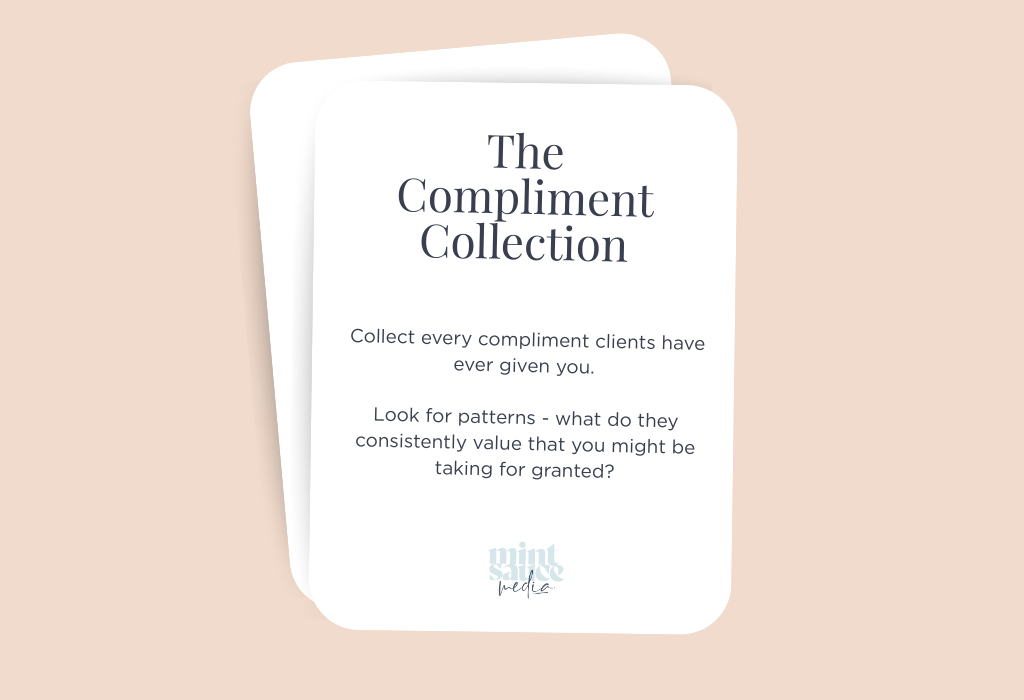
23. The compliment collection
Check your reviews and testimonials and gather every genuine compliment clients have given you about working together. Look for patterns – what do they consistently value that you might be taking for granted?
Often, your biggest differentiator is something you think is “obvious” or “normal.”
Implementation exercise: Putting it all together
24. The brand filter test
This is the exercise that ties everything together. Before making any business decision – from social media content to pricing to partnerships – ask yourself: “Does this feel like my brand would do this?”
If you can’t answer confidently, you need more clarity. If the answer is no, don’t do it, no matter how good the opportunity seems.
What happens next?
Here’s the thing about authentic branding – it’s not a destination, it’s a practice. Your brand will evolve as you grow, and that’s exactly how it should be.
Don’t try to tackle all 24 exercises at once. Pick three or four that resonate most (or make you slightly uncomfortable – that’s usually where the breakthrough insights hide) and go deep.
The goal isn’t to have perfect answers to everything. It’s to develop a clear sense of who you are so you can show up authentically in everything you do.
Because here’s what I’ve learned after years of working with creative business owners: The world doesn’t need another perfectly polished, personality-free brand. It needs YOUR unique perspective, quirks and all.
Your authentic brand is your biggest competitive advantage. It’s time to stop hiding it and start celebrating it.
